This time, I did not want to test another full writing order. That would have been too predictable, and honestly, less useful. A much more realistic student problem is this: you already have a draft, but it is not submission-ready. It is messy, uneven, a little undercooked, and not quite safe enough to hand in with confidence.
That is exactly why I wanted to test a different side of KingEssays essay writing service – not the “write my paper from scratch” side, but the repair side. Specifically, I wanted to know whether their smaller academic support services actually do what they promise, or whether they are just different price tags for the same basic cleanup.
Pros and Cons
| Pros | Cons |
| Useful range of “fix” services beyond full essay writing | Formatting alone will not improve weak content |
| Clear separation between Formatting, Proofreading, and Editing | Proofreading and Editing can feel close in price for students on a tight budget |
| Essay Editing gives the strongest academic value in this test | |
| Proofreading improves readability without making the text sound robotic | |
| Formatting is practical for last-stage submission cleanup | |
| Each service stayed inside its actual role instead of overpromising | |
| Good option for students who already have a draft and want to improve it |
So instead of ordering one new essay, I took one deliberately flawed student paper and used it as the test object for three different services: Formatting, Proofreading and Essay Editing.
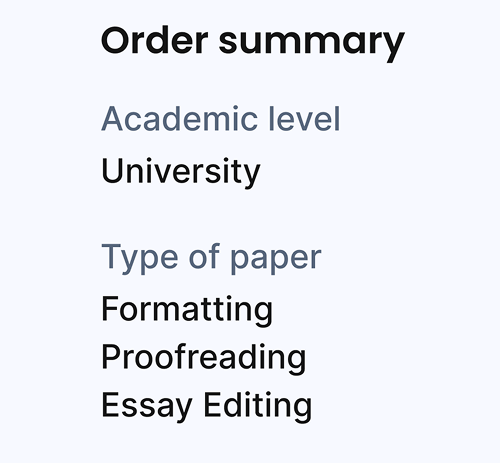
That already made this experiment more interesting than a normal review, because now the question was not just “Is KingEssays good?” It was much more specific: What exactly does each of these services fix – and which one is actually worth paying for?
The Paper I Used for the Test
I did not use a disaster draft. That would be too easy and too dramatic. I used something much more realistic: a paper that looked mostly okay at first glance, but had enough weak spots to create risk under actual grading.
That is the kind of draft students often end up with when they are tired, slightly rushed, and 80% done but nowhere near ready.
Here is what the test paper looked like before I sent it anywhere:
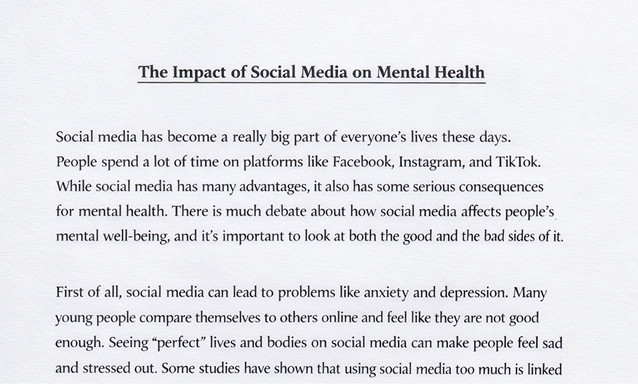
- about 10 pages / 2750 words;
- undergraduate level;
- argumentative academic topic;
- generally readable, but not polished;
- good enough to keep, weak enough to need help.
In other words: not broken, but definitely not safe.
What Was Wrong With It
This is where the test became useful. I wanted the paper to have the kinds of problems students actually pay to fix – not theatrical mistakes, but realistic weaknesses that sit in that annoying middle zone between “probably fine” and “I should not submit this yet.”
Before sending it to KingEssays, the draft had these issues:
- a broad title that sounded more like a topic label than a real academic title;
- a soft thesis that pointed in the right direction but did not hit hard enough;
- awkward sentence rhythm in several body sections;
- repetition in phrasing and transitions;
- formatting inconsistencies across headings, spacing, and references;
- paragraphs that explained too much and argued too little;
- a conclusion that felt clean but forgettable.
That mix was intentional. It gave me a paper that could realistically be sent to any of the three services without feeling fake or forced.
Why This Test Was Actually More Interesting Than a Full Writing Order
Because these are the kinds of services students use when they are trying to save a paper, not buy a fantasy.
And that creates a much better question than the usual “can they write an essay?” angle.
I wanted to know:
- Does Formatting actually do more than make the page look cleaner?
- Does Proofreading feel like real language cleanup or just spellcheck with a price tag?
- Does Essay Editing actually improve the academic strength of the paper – or just make it prettier?
That is a much sharper test because each service is supposed to solve a different kind of problem. If they all feel the same in the end, then one or two of them are probably not worth the money.
The Price Ladder Was Already Interesting
Before I even looked at results, the pricing alone gave me a useful starting point.
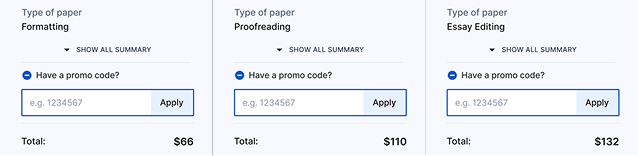
- Formatting – $66.
- Proofreading – $110.
- Essay Editing – $132.
That price spread matters because it sets up the real value question immediately.
If Formatting is almost half the price of Editing, then I need to know whether it only fixes surface-level presentation or whether it quietly improves more than advertised. If Editing costs the most, I need to know whether it genuinely earns that extra money.
And honestly, that is exactly the kind of breakdown I rarely see in service reviews. Most reviews stop at “they offer editing too,” which is basically useless. I wanted to know what the money actually buys.
My Working Hypothesis Before Testing
Before I sent the same paper through all three options, I wrote down what I expected each one to do – because if I did not define the job clearly first, it would be too easy to over-credit weak improvements later.
What I expected from each service:
- Formatting should fix presentation, citation style, reference layout, and structural cleanliness – but not rewrite the paper.
- Proofreading should improve grammar, punctuation, awkward phrasing, and readability – but not reshape the argument.
- Essay Editing should improve clarity, academic sharpness, transitions, title quality, and overall flow – not just clean the surface.
That distinction matters a lot. Because if all three services only produce the same generic “cleaner” result, then the price ladder is basically fake segmentation.
At this point, before results even came in, this was already a much more interesting setup than another generic essay-writing review. The services were clearly positioned differently, the pricing was distinct enough to matter, and the paper itself was realistic enough to make the test worth trusting.
What made this setup strong:
- one paper;
- three different “fix” services;
- three different promises;
- three different price points;
- one very clear question: which one actually gives the best value?
And honestly, that is the part I liked most already. This was not going to be a homepage review. It was going to be a service separation test. And that is where KingEssays had a real chance to be either genuinely useful – or very easy to expose.
Formatting vs Proofreading: Where “Cosmetic” Stops Being Cosmetic
I started with the two services that are usually treated as minor: Formatting and Proofreading. On paper, both look like cleanup layers. In practice, they are supposed to solve very different problems.
So instead of testing them separately in isolation, I ran them as a comparison: same paper, two different types of “light” intervention.
Case 1 – Formatting ($66)
This was the lowest-cost option, and honestly, the easiest one to underestimate. Most students assume formatting is something you can fix yourself in 15 minutes. That is true – until it is not.
What actually changed:
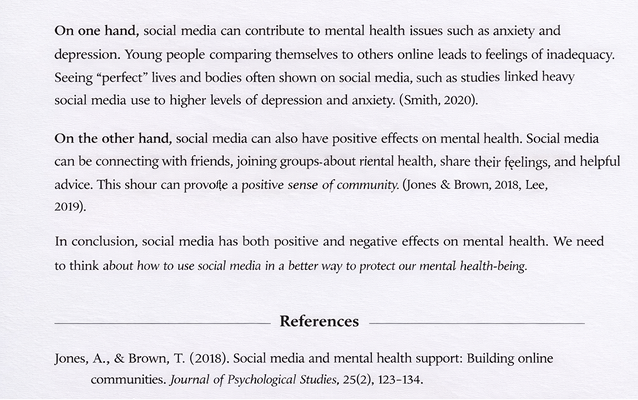
- reference list became consistent and correctly structured;
- spacing and alignment were cleaned across the entire document;
- headings stopped “floating” and became visually structured;
- citation style was standardized;
- the paper looked immediately more academic without touching content.
What did NOT change:
- no rewriting of sentences;
- no changes to argument or thesis;
- no improvement in clarity or flow.
And that is actually a good thing. Formatting did exactly what it was supposed to do – nothing more, nothing less.
My reaction:
- this is not a “wow” service;
- but it is a very clean execution of a narrow task;
- and it removes a surprising amount of submission risk.
If your paper is structurally okay but looks messy or inconsistent, this is a very easy fix. If your paper is weak, this will not save it.
Case 2 – Proofreading ($110)
This is where things became more interesting. Proofreading sits in that uncomfortable middle zone: it is not supposed to rewrite your paper, but it is also expected to make it noticeably better.
What actually changed:
- awkward sentences became noticeably smoother;
- repetitive phrasing was reduced;
- transitions felt more natural;
- grammar inconsistencies were fully cleaned;
- the text became easier to read without sounding artificial.
What did NOT change:
- thesis remained structurally the same;
- argument depth did not increase;
- paragraph logic stayed as originally written.
This is exactly where proofreading did its job correctly. It did not try to “improve the essay” in an academic sense – it made the existing version cleaner, tighter, and more readable.
The most important observation here:
- the paper did NOT start sounding robotic;
- it still felt like a student-level text;
- but a more confident and polished version of the same student.
That balance is harder to get right than it sounds. Many proofreading services either do too little or overcorrect into something unnatural. This one stayed controlled.
Formatting vs Proofreading – The Real Difference
At this point, the difference between the two services became very clear, and more importantly – useful.
- Formatting changed how the paper looked.
- Proofreading changed how the paper read.
That sounds simple, but in practice it is exactly the distinction students need to understand before spending money.
If I had to break it down practically:
- Formatting = presentation fix.
- Proofreading = language fix.
And importantly, they did not overlap too much. One did not “eat” the other’s value.
Which One Felt More Worth It?
This is where price starts to matter.
- $66 (Formatting) → small but clean improvement
- $110 (Proofreading) → noticeably stronger readability upgrade
My honest take:
- Formatting is worth it if your paper looks messy.
- Proofreading is worth it if your paper reads awkwardly.
- if you had to choose only one → Proofreading gives more visible value.
But neither of them solves the deeper issue: what if the paper is structurally weak? That is exactly where the third service comes in – and that is where the test actually becomes serious.
Both services worked exactly within their intended scope, which is honestly a positive signal. There was no artificial overlap, no inflated promises, and no attempt to blur the lines between tiers.
What stood out:
- Formatting was clean, precise, and limited to its role.
- Proofreading was noticeably more impactful without overstepping.
- neither service tried to pretend it was something bigger than it is.
And that actually made the setup stronger going into the final test.
Because if both of these services stayed in their lane, then Essay Editing now has to justify being the most expensive option.
Essay Editing ($132): Where the Paper Actually Changes
This was the only service in the test that had the right to do something more than cleanup. Formatting handled presentation. Proofreading handled language. Editing was supposed to touch the thinking itself.
So the expectation here was very clear: if Editing does not go deeper than the other two, then it is just an overpriced version of proofreading. If it does – then it becomes the most important service in the entire stack.
What Actually Changed
This is where the difference became visible almost immediately – not in one dramatic moment, but in how the paper started to feel more directed.
Here is what editing actually improved:
- the thesis became more specific and less “safe”;
- several paragraphs were tightened and refocused;
- transitions stopped repeating the same logic and became cleaner and more purposeful;
- the introduction felt less generic and more anchored;
- the conclusion became less predictable;
- the overall flow of the paper felt more controlled.
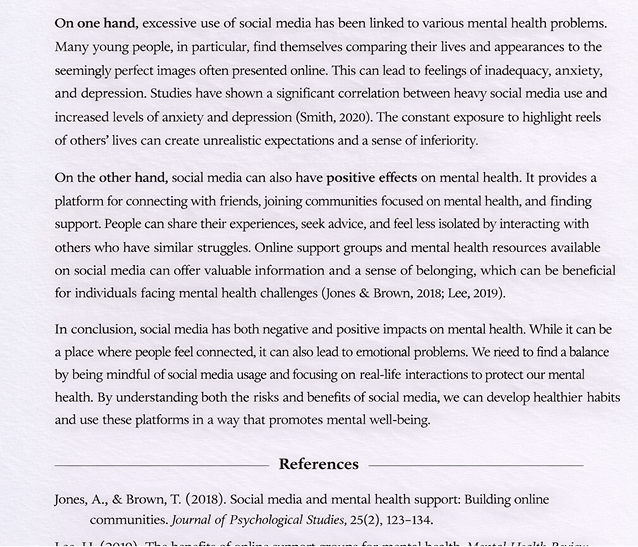
None of these changes were loud. But together, they shifted the paper out of that “almost fine” zone into something that felt more confident and more deliberate.
What Stayed the Same
And this is just as important, because it shows that editing did not overreach.
- the original topic and structure were preserved;
- the core ideas were not replaced;
- the voice still felt student-level, not rewritten from scratch.
This matters a lot. Because once editing crosses into full rewriting, it stops being editing and starts becoming a different service entirely.
Where Editing Clearly Outperformed the Other Two
The easiest way to understand the difference is to look at what each service cannot do – and what editing actually handled.
- Formatting made the paper presentable.
- Proofreading made the paper readable.
- Editing made the paper stronger.
And that third layer is the one that actually affects how a paper is evaluated, not just how it looks or sounds.
Did It Feel Worth $132?
This is the only question that matters at this point.
Short answer: yes – but only if your paper actually needs it.
Here is the practical breakdown:
- if your paper is already clean and clear → editing might feel like overkill;
- if your paper feels “almost there but not strong enough” → editing is exactly the right level;
- if your paper is weak structurally → this is the only service in this test that can realistically help.
That is what makes it valuable. It is not about making the paper prettier. It is about making it hold together better under evaluation.
The Most Important Difference in the Entire Test
By the time all three versions were complete, the hierarchy was very clear.
- Formatting fixed the surface.
- Proofreading fixed the language.
- Editing fixed the direction.
And direction is the hardest thing to fix on your own when you are tired and too close to your own writing.
Which Service Actually Gives the Best Value?
This is where everything comes together.
If I had to translate the entire test into real advice:
- Formatting ($66) – buy it if your paper looks messy but reads fine.
- Proofreading ($110) – buy it if your writing feels awkward or inconsistent.
- Editing ($132) – buy it if your paper feels “not strong enough” even though it is complete.
And if we are talking about pure value per dollar:
- Formatting = smallest impact, but clean and reliable.
- Proofreading = noticeable improvement in readability.
- Editing = the only service that changes how the paper performs.
What’s Actually Worth Paying For
This test ended up being much more useful than a standard essay-writing review. Instead of asking whether KingEssays can produce a paper from scratch, it showed something more practical: what happens when you already have a paper – and you want to make it better. And in that context, the service breakdown made sense.
- the pricing tiers were logically structured;
- each service stayed within its role;
- the improvements were visible and proportional.
KingEssays works best not just as a writing service, but as a layered support system. And once you understand which layer your paper actually needs, it becomes much easier to spend money without wasting it. That, in my opinion, is the most useful outcome of this entire review.
FAQ
Is Essay Editing really different from Proofreading on KingEssays?
Yes – and in this test, the difference was meaningful. Proofreading mainly cleaned the language: grammar, awkward phrasing, repetition, and readability. Editing went further by improving the paper’s academic direction, including clarity, transitions, and how confidently the argument held together.
Which KingEssays service gives the best value for money?
If the paper is already decent but messy, Formatting is the cheapest practical fix. If the writing feels clumsy or inconsistent, Proofreading gives more visible improvement. But if the paper is complete and still feels weaker than it should, Essay Editing is the strongest overall value because it changes more than just the surface.
Can Formatting alone make an essay look better to a professor?
Yes – but only in the technical sense. It can absolutely make a paper look cleaner, more academic, and more submission-ready. What it cannot do is make weak reasoning, vague paragraphs, or a soft thesis suddenly look smarter. It helps presentation, not substance.
Who should use Proofreading instead of Editing?
Proofreading makes the most sense when the ideas are already there and the main problem is language quality. If the paper sounds awkward, repetitive, or just not polished enough, proofreading is often enough. Editing is better when the draft feels complete but still lacks sharpness or confidence.
Is KingEssays more useful for improving an existing draft than writing from scratch?
For this specific review, yes – that was actually one of the most interesting takeaways. KingEssays worked especially well as a layered support service, where the value came not from replacing the student’s work entirely, but from helping turn a rough or uneven draft into something much safer and more presentable.